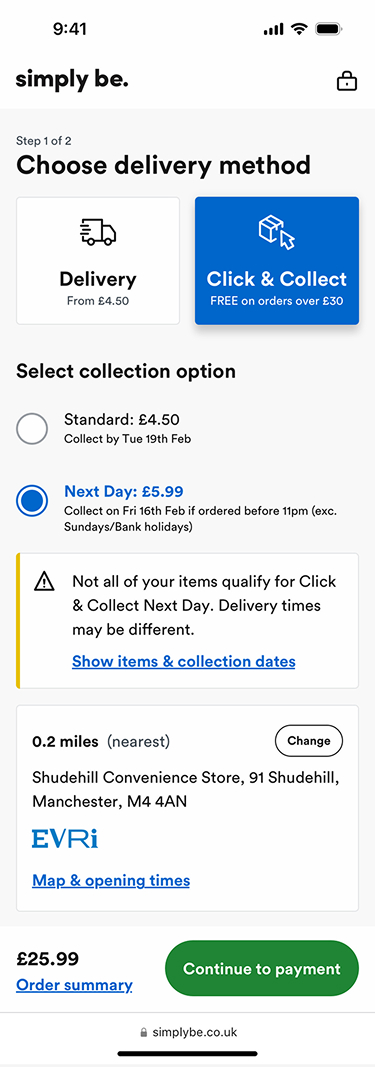
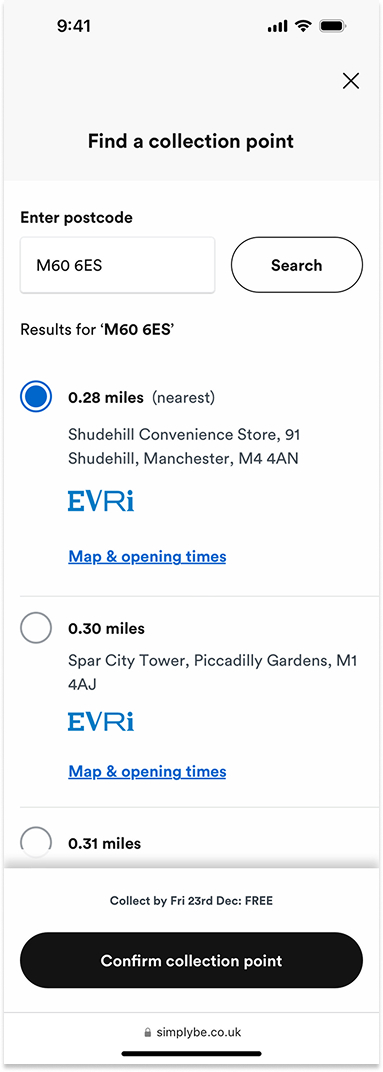
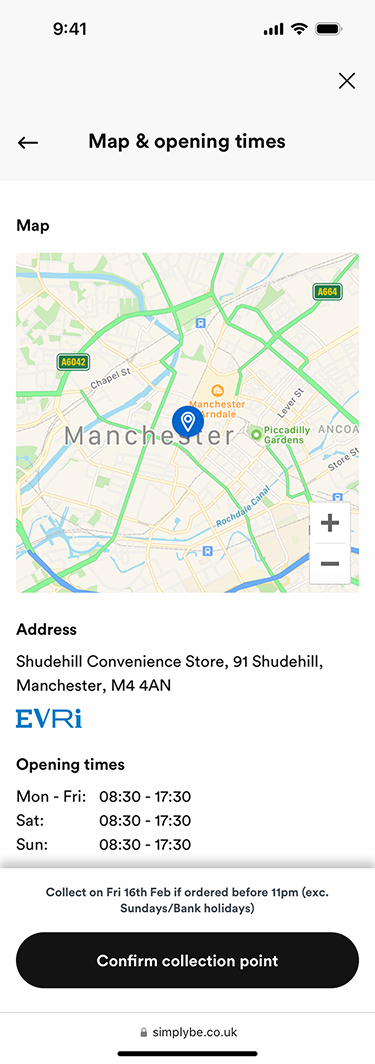
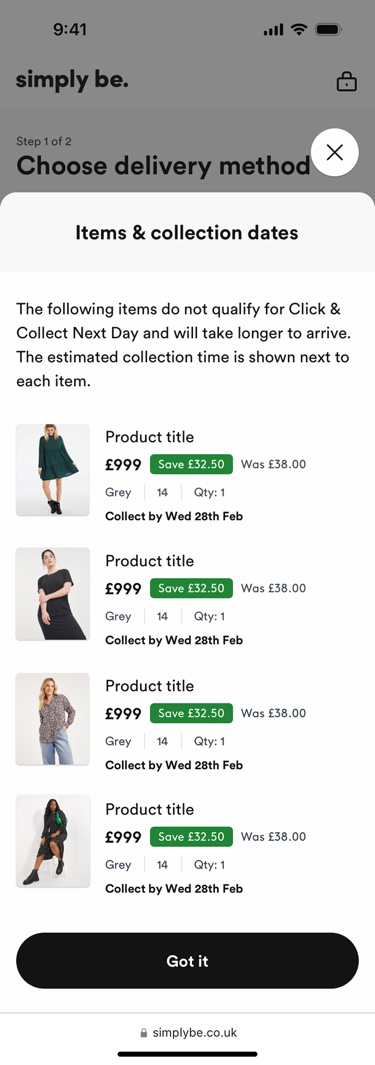
The video walks through the checkout with two items in the bag: a dress, and a fragrance sent from a supplier. From the bag the shopper goes to the checkout. At step 1, Choose delivery method, home delivery is already selected, with a notice that some items aren't eligible for this delivery option and will be dispatched separately. In the order summary, the shopper opens Show items, which lists the items in the bag, with an expected delivery date for the one that isn't eligible for the selected delivery option. They close it and pick Click & Collect, where the nearest Evri collection point is already chosen, and switch from Standard collection to Next Day. A notice explains that not every item qualifies for Next Day, and the shopper opens Show items & collection dates, which lists the fragrance with the date it is expected instead. After closing it, they open the nearest collection point's map and opening times to see where the collection point is and when it is open. They close the map and select Change to change the collection point: a search, already filled with the delivery postcode, lists nearby collection points with their distance and address, another collection point's map and opening times are opened, and that collection point is confirmed. They change it again, searching with a different postcode, and confirm a third collection point. At step 2, the side panel shows the collection address and Click & Collect Next Day as the delivery method, with Pay later selected under How would you like to pay? The shopper changes the collection point once more from there, and the side panel updates to show the new address. Finally, they select Change next to the delivery method to change it, and the checkout goes back to step 1.

One of the key projects I delivered while at N Brown was introducing Next Day Click & Collect as a new delivery option for the e‑commerce platform. This required re‑architecting the checkout flow, along with a new design and improved UX across every step. The work involved creating new UI components, building API routes to aggregate data from multiple back‑end and third‑party services, implementing per‑product collection‑time logic, and modernising existing code.
Built with: TypeScript, Next.js, Redux, CSS Modules, React Testing Library, Jest, Cypress